Sale Price:
$2,200.00
Original Price:
$3,100.00
120 × 80cm
47.2 × 31.5in
Acrylic, oil pastels, and collage on canvas. Shipped unframed. Fully insured shipping via DHL.
This sale is active only during February 1–28
All sales are final. This is a limited studio sale with discounted pricing. Shipping is scheduled for the first week of March and is not immediate. No refunds, returns, or exchanges will be accepted.
“Eros as a Personal Gospel”
On Love, Vulnerability, and the Divine Body
I did not begin this painting with an image of a god. I began with a feeling I could not make coherent.
Love, as it is often represented, arrives already resolved. It has a face, a posture, a narrative. Cupid is its most familiar shorthand: a small winged body, confident in its aim, certain of its effect. That image has never been able to hold what love has asked of me. It feels too intact, too sure of itself. Too unafraid. Too simple and infantile.
What I wanted to paint was not love as promise, but love as exposure. Not the moment of impact, but the state that follows, when certainty loosens, when the body remains open longer than it intended to.
Eros entered the work quietly. Not as an vision nor as an answer. He appeared as something fragile, something that could be damaged by being named too quickly. I learned to approach him without fixing his outline, allowing him to remain partially unresolved.
This painting behaves less like a depiction and more like a placement. In my practice, some works perform and others record. This one stays. It does not explain itself. It does not seek alignment. It exists as an offering.
Restraint became necessary when working on this. There was nothing to add without interrupting what was already present. Eros needed space around him, not to elevate him, but to leave him unprotected. Negative space functions here as exposure rather than absence.
The figure that emerges is winged and blue-toned, neither male nor female, neither child nor adult. The body is nude, though not available. Its nakedness does not invite intimacy; it endures it. There is no seduction here, no choreography for the viewer.
This is not the nude as it has been polished by tradition, arranged, corrected, offered for consumption. This body is proportionally uncertain, awkward, alert to itself without performing that awareness. It is not a body designed to be desired. It is a body designed to feel. A lover’s body, rather than an object of love.
In his earliest form, Eros was not an image at all, but a force. In Hesiod’s Theogony, he emerges from Chaos alongside Gaia and Tartarus. He is not romantic. He is generative. He is the condition that allows matter to draw toward itself rather than disperse. Desire as structure, as a primordial force.
Later, Eros acquires a body, a lineage, a temperament. He becomes sensual, volatile, dangerous. Desire loses its neutrality.
Between these versions: cosmic force and erotic figure, philosophy offers another way of seeing. In Plato’s Symposium, Eros appears not as fulfillment, but as tension. A daimon: neither mortal nor divine, suspended in between. Love is no longer something one has, but something one moves through.
Born of Poros and Penia, resource and poverty, Eros desires what he does not possess. He is incomplete, restless, oriented toward what exceeds him. Love, in this framing, is not resolution but method, it comes from lack. It fractures the self and then asks that the fracture be lived inside.
Diotima’s ladder does not promise intimacy as an end. It describes a progression: from bodies to souls, from souls to knowledge, from knowledge to beauty itself. Love becomes a discipline, an initiation into instability, and ultimately creation.
This is the version of Eros I recognize. Not as consolation, not as destiny, but as vulnerability sustained over time. A force that does not repair the self, but alters it.
For a long time, love was understood as something that held. I no longer experience it that way. Love loosens. It rearranges. It leaves the self changed in ways that are not immediately legible. What remains is a kind of raw exposure. A state of being more permeable than where it was initiated. This is the condition the painting carries.
The Eros I painted is composite: part primordial force, part philosophical tension, part human fragility. Neither male nor female. Neither whole nor broken. He does not offer reassurance. He does not resolve.
This work is a gospel only insofar as it records experience rather than belief. Love appears here not as promise, but as practice. Not as completion, but as an ongoing cutting and openness, unfinished, vulnerable, and forever still at work.
120 × 80cm
47.2 × 31.5in
Acrylic, oil pastels, and collage on canvas. Shipped unframed. Fully insured shipping via DHL.
This sale is active only during February 1–28
All sales are final. This is a limited studio sale with discounted pricing. Shipping is scheduled for the first week of March and is not immediate. No refunds, returns, or exchanges will be accepted.
“Eros as a Personal Gospel”
On Love, Vulnerability, and the Divine Body
I did not begin this painting with an image of a god. I began with a feeling I could not make coherent.
Love, as it is often represented, arrives already resolved. It has a face, a posture, a narrative. Cupid is its most familiar shorthand: a small winged body, confident in its aim, certain of its effect. That image has never been able to hold what love has asked of me. It feels too intact, too sure of itself. Too unafraid. Too simple and infantile.
What I wanted to paint was not love as promise, but love as exposure. Not the moment of impact, but the state that follows, when certainty loosens, when the body remains open longer than it intended to.
Eros entered the work quietly. Not as an vision nor as an answer. He appeared as something fragile, something that could be damaged by being named too quickly. I learned to approach him without fixing his outline, allowing him to remain partially unresolved.
This painting behaves less like a depiction and more like a placement. In my practice, some works perform and others record. This one stays. It does not explain itself. It does not seek alignment. It exists as an offering.
Restraint became necessary when working on this. There was nothing to add without interrupting what was already present. Eros needed space around him, not to elevate him, but to leave him unprotected. Negative space functions here as exposure rather than absence.
The figure that emerges is winged and blue-toned, neither male nor female, neither child nor adult. The body is nude, though not available. Its nakedness does not invite intimacy; it endures it. There is no seduction here, no choreography for the viewer.
This is not the nude as it has been polished by tradition, arranged, corrected, offered for consumption. This body is proportionally uncertain, awkward, alert to itself without performing that awareness. It is not a body designed to be desired. It is a body designed to feel. A lover’s body, rather than an object of love.
In his earliest form, Eros was not an image at all, but a force. In Hesiod’s Theogony, he emerges from Chaos alongside Gaia and Tartarus. He is not romantic. He is generative. He is the condition that allows matter to draw toward itself rather than disperse. Desire as structure, as a primordial force.
Later, Eros acquires a body, a lineage, a temperament. He becomes sensual, volatile, dangerous. Desire loses its neutrality.
Between these versions: cosmic force and erotic figure, philosophy offers another way of seeing. In Plato’s Symposium, Eros appears not as fulfillment, but as tension. A daimon: neither mortal nor divine, suspended in between. Love is no longer something one has, but something one moves through.
Born of Poros and Penia, resource and poverty, Eros desires what he does not possess. He is incomplete, restless, oriented toward what exceeds him. Love, in this framing, is not resolution but method, it comes from lack. It fractures the self and then asks that the fracture be lived inside.
Diotima’s ladder does not promise intimacy as an end. It describes a progression: from bodies to souls, from souls to knowledge, from knowledge to beauty itself. Love becomes a discipline, an initiation into instability, and ultimately creation.
This is the version of Eros I recognize. Not as consolation, not as destiny, but as vulnerability sustained over time. A force that does not repair the self, but alters it.
For a long time, love was understood as something that held. I no longer experience it that way. Love loosens. It rearranges. It leaves the self changed in ways that are not immediately legible. What remains is a kind of raw exposure. A state of being more permeable than where it was initiated. This is the condition the painting carries.
The Eros I painted is composite: part primordial force, part philosophical tension, part human fragility. Neither male nor female. Neither whole nor broken. He does not offer reassurance. He does not resolve.
This work is a gospel only insofar as it records experience rather than belief. Love appears here not as promise, but as practice. Not as completion, but as an ongoing cutting and openness, unfinished, vulnerable, and forever still at work.

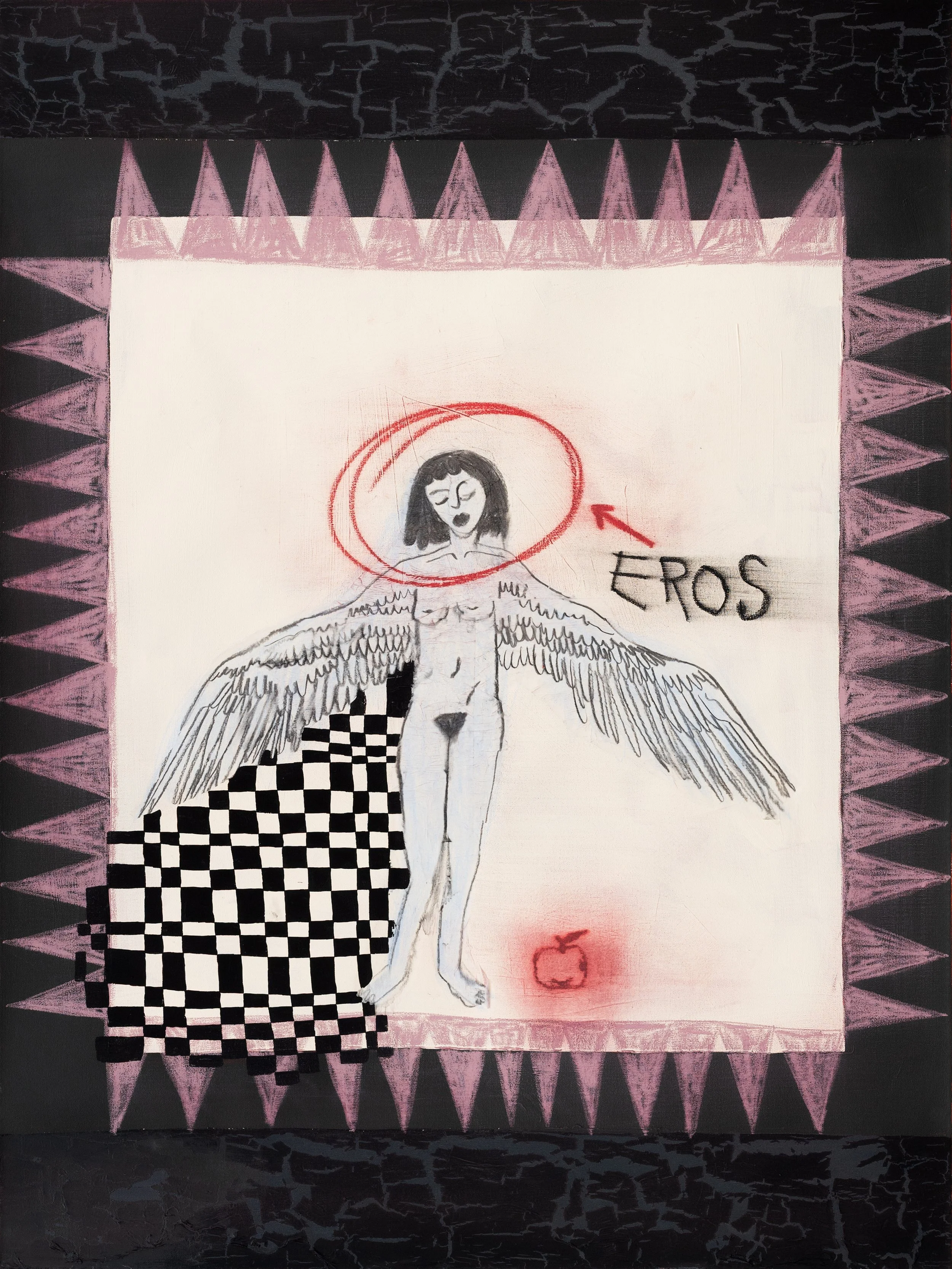 Image 1 of 9
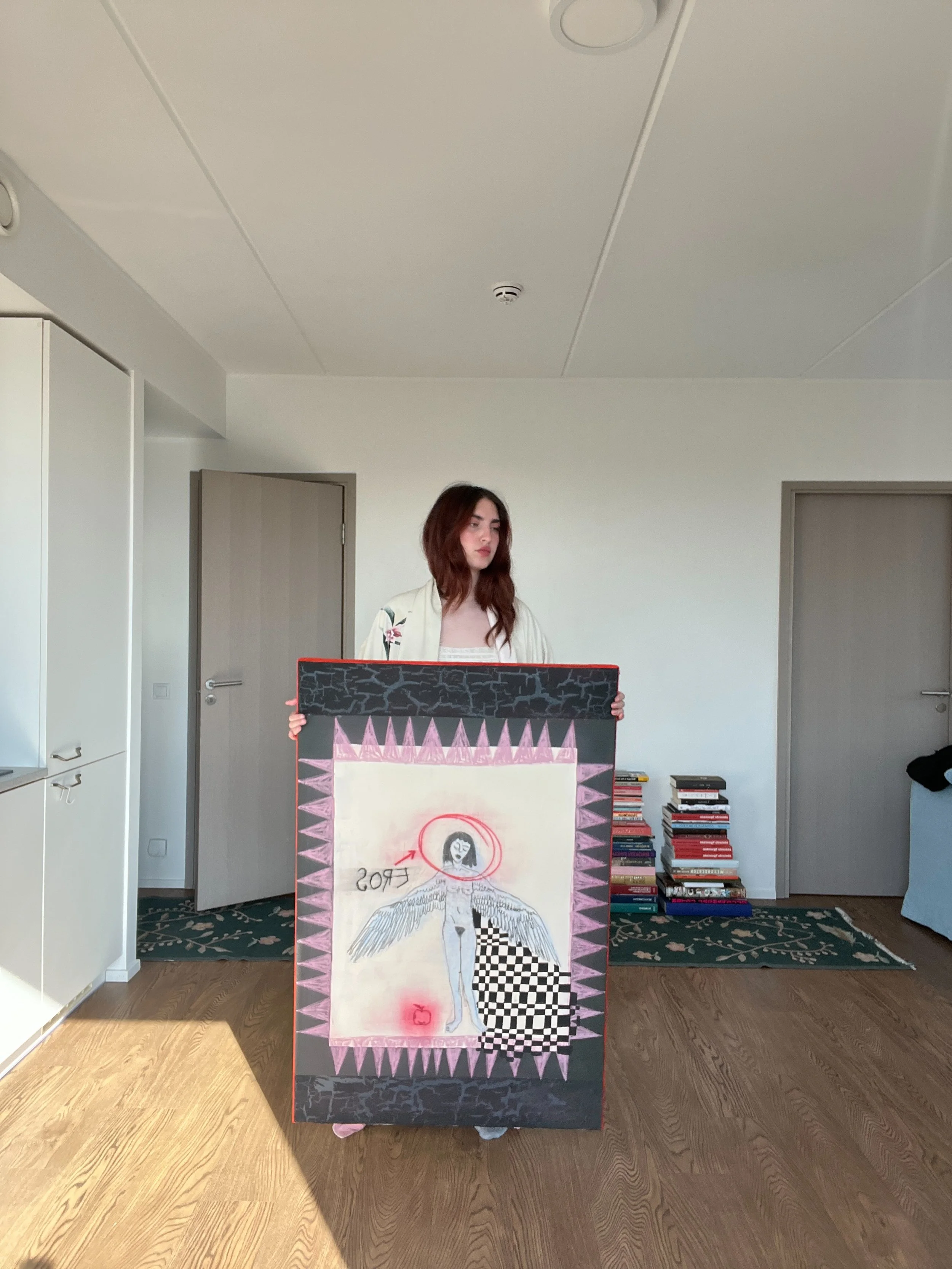 Image 2 of 9
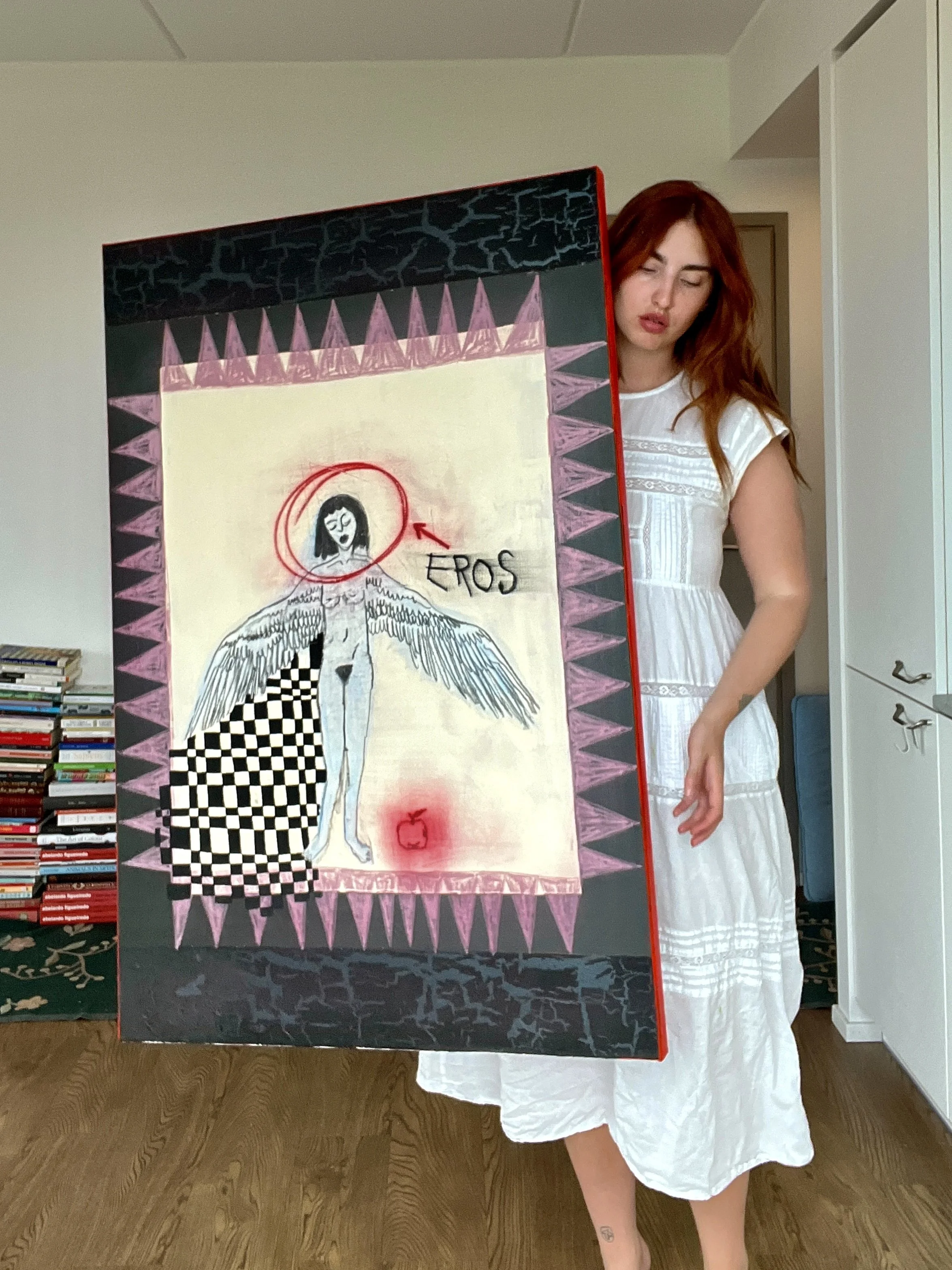 Image 3 of 9
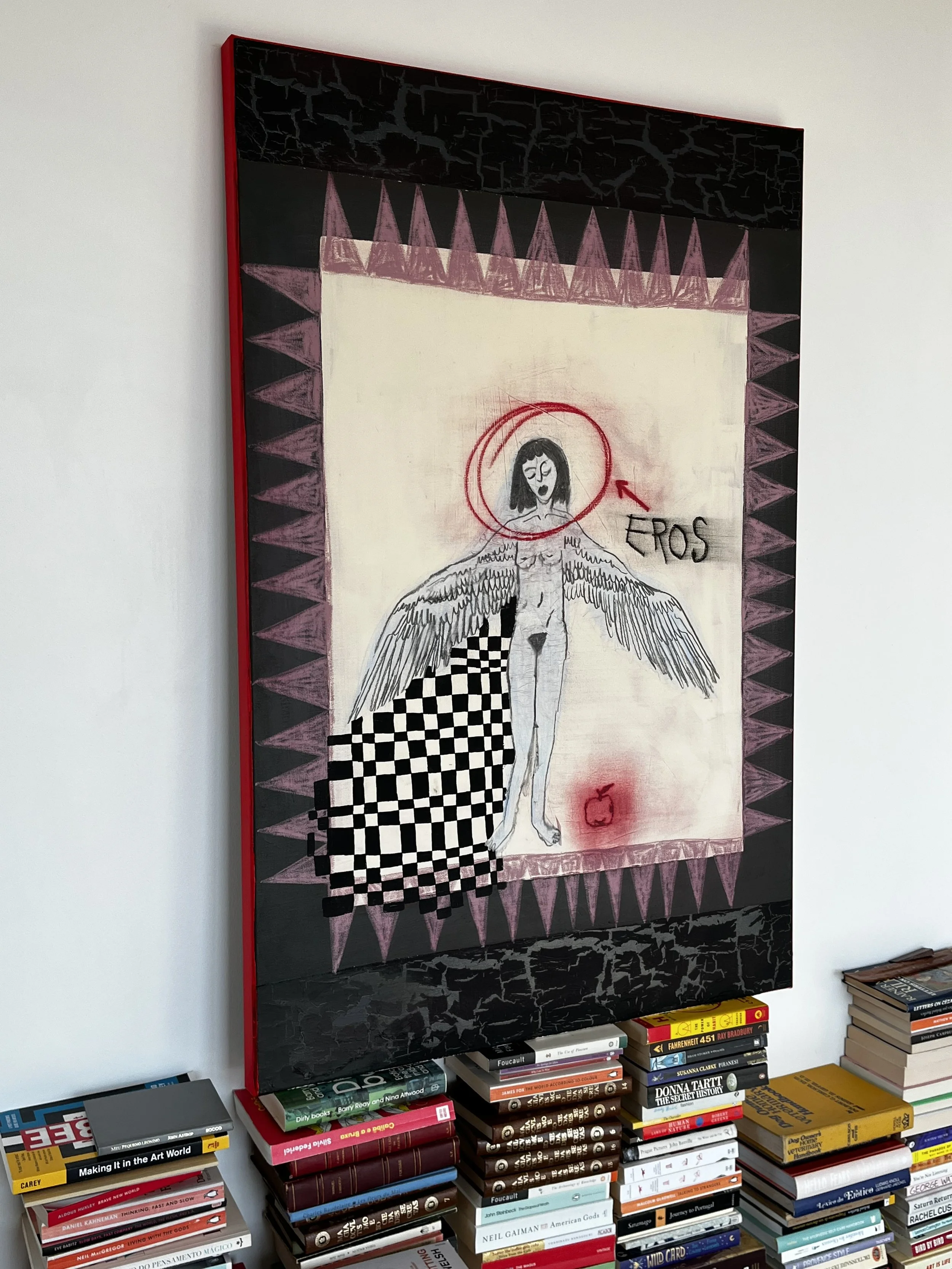 Image 4 of 9
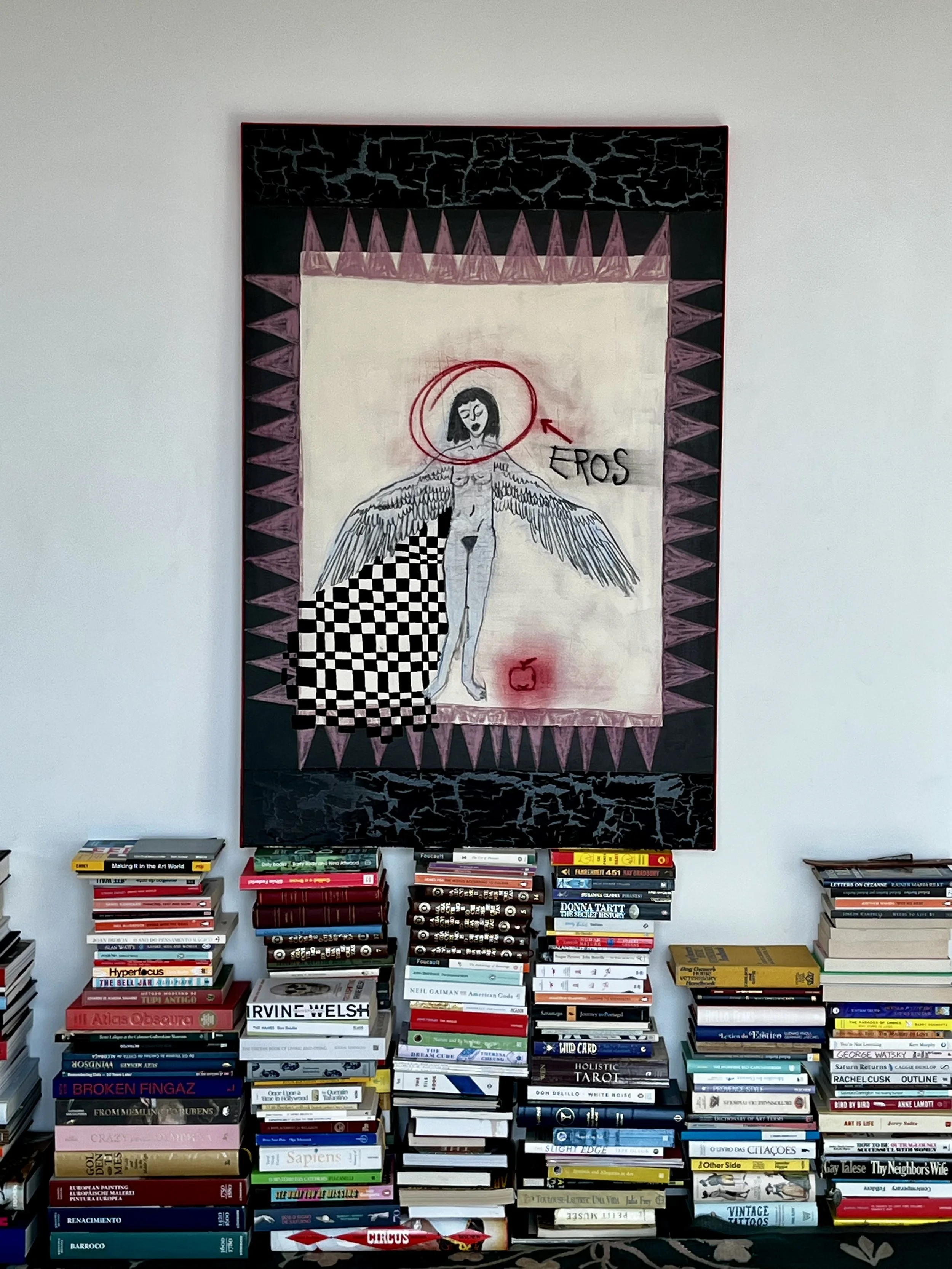 Image 5 of 9
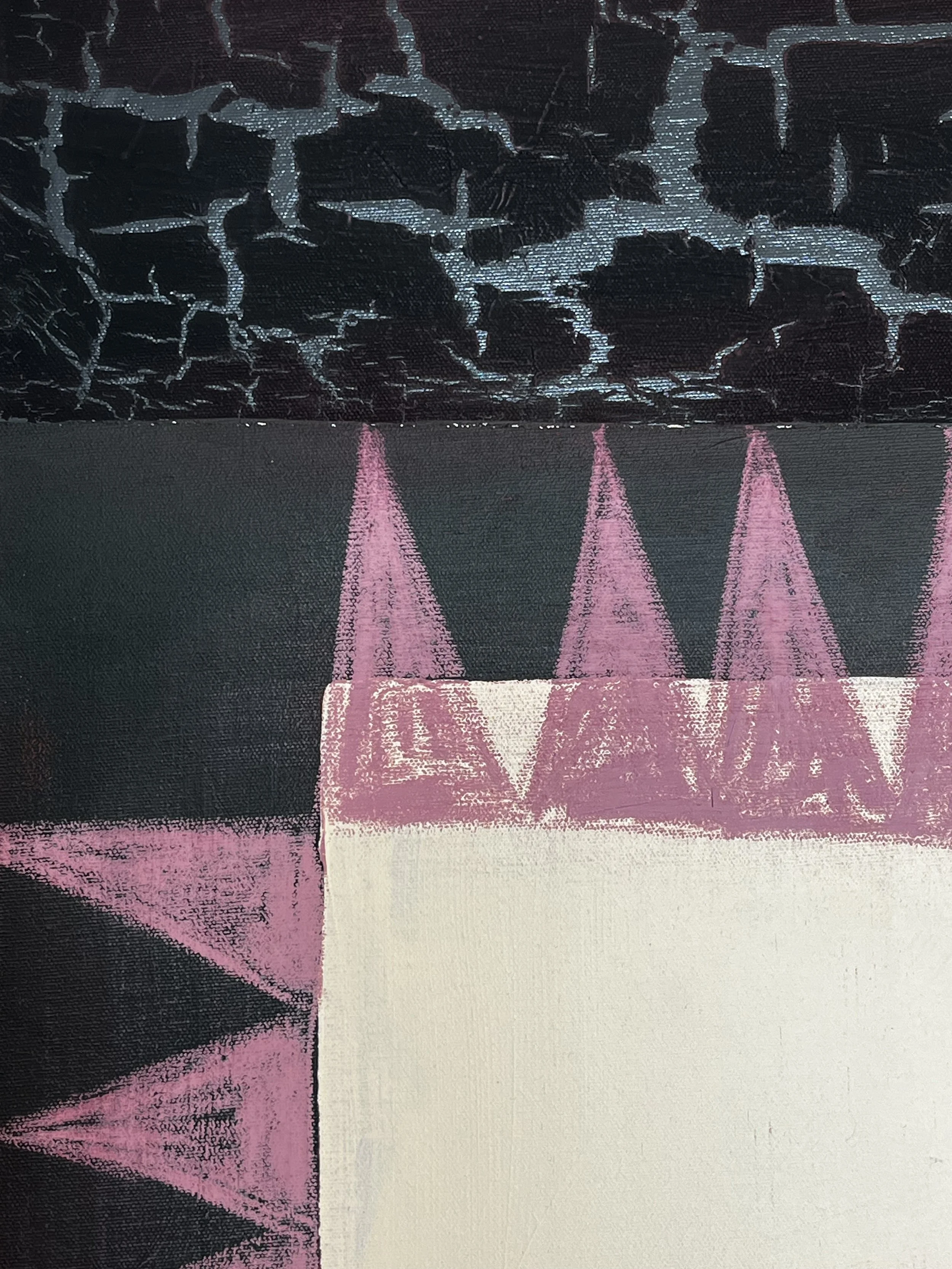 Image 6 of 9
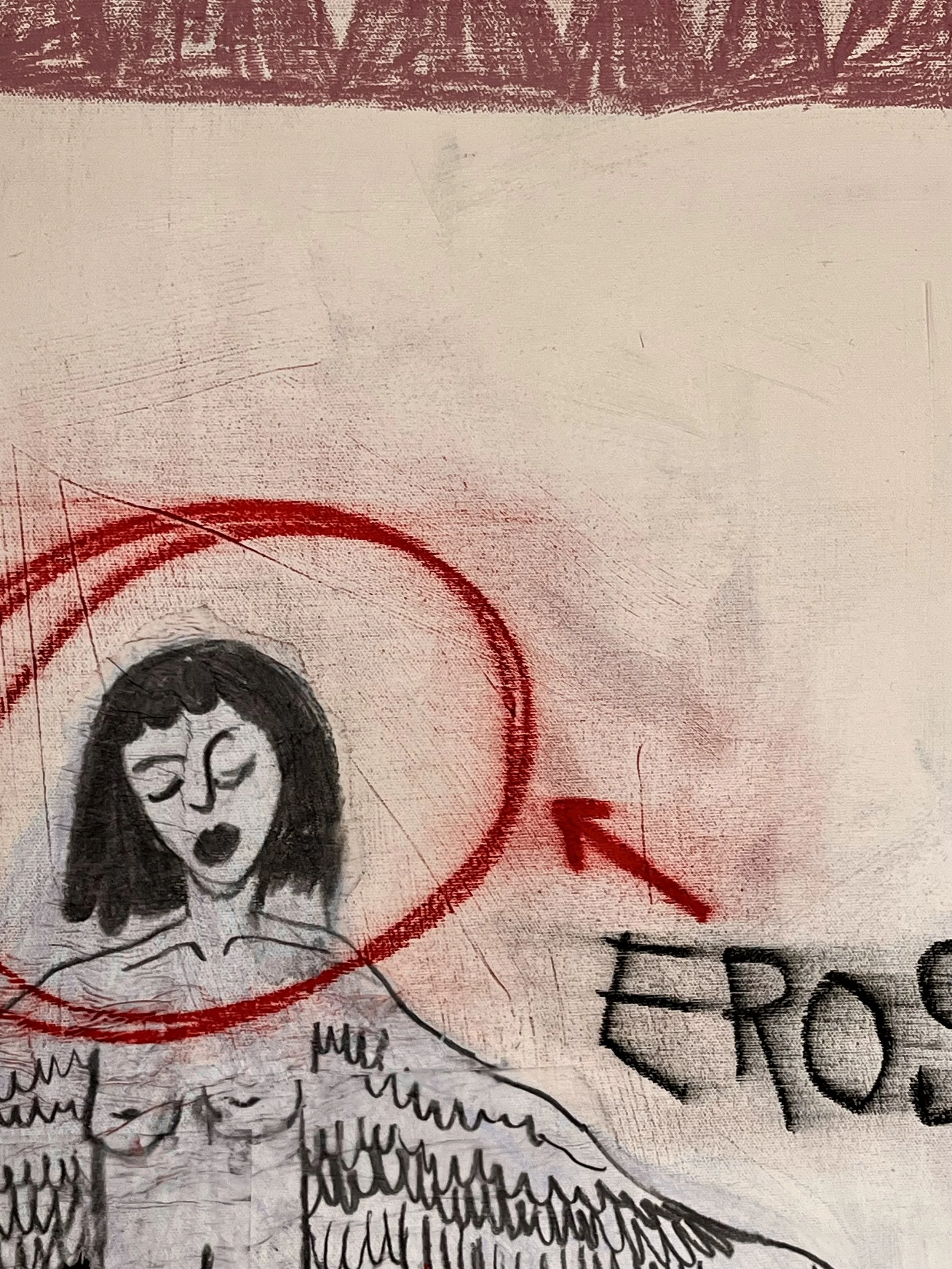 Image 7 of 9
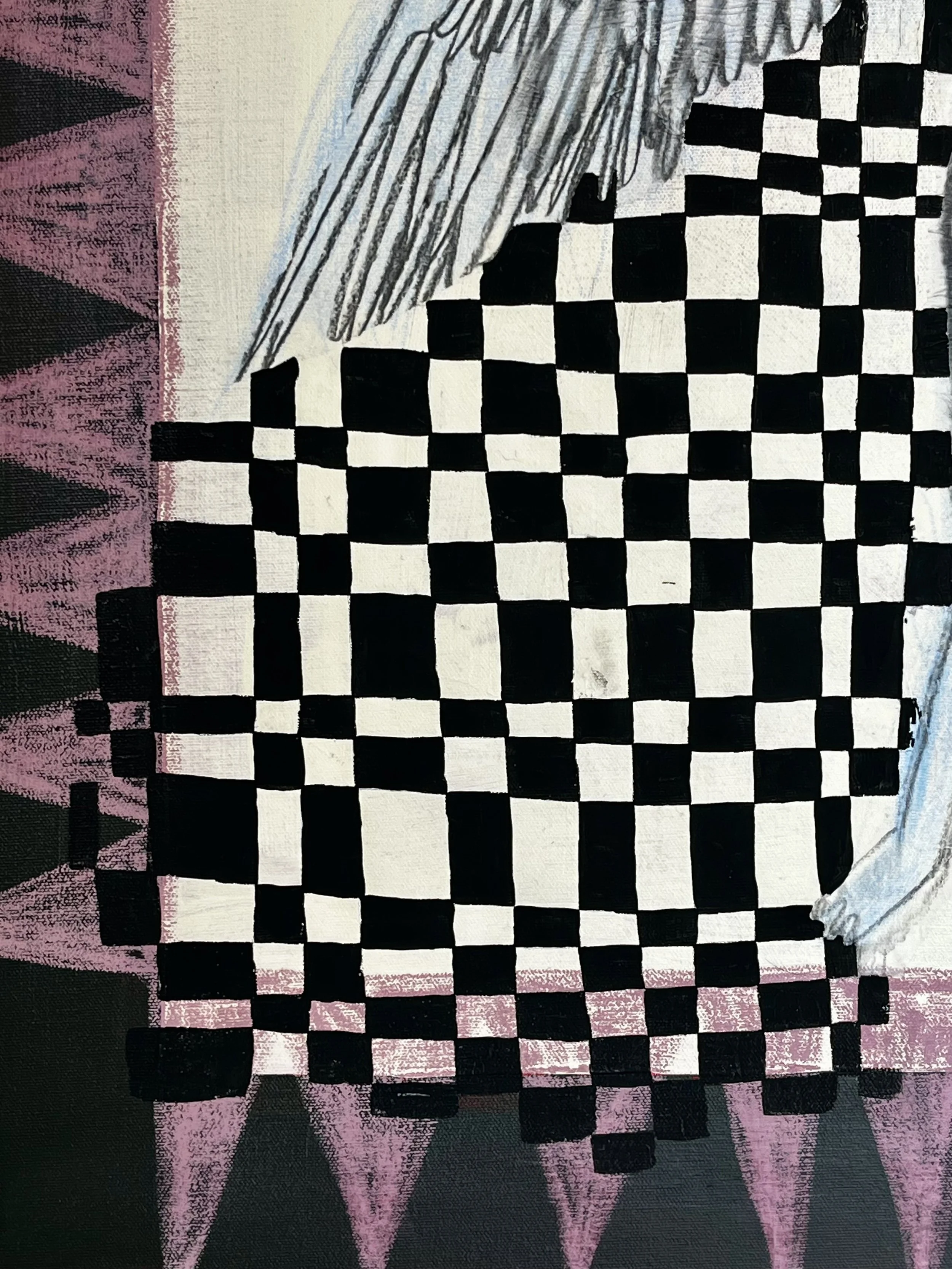 Image 8 of 9
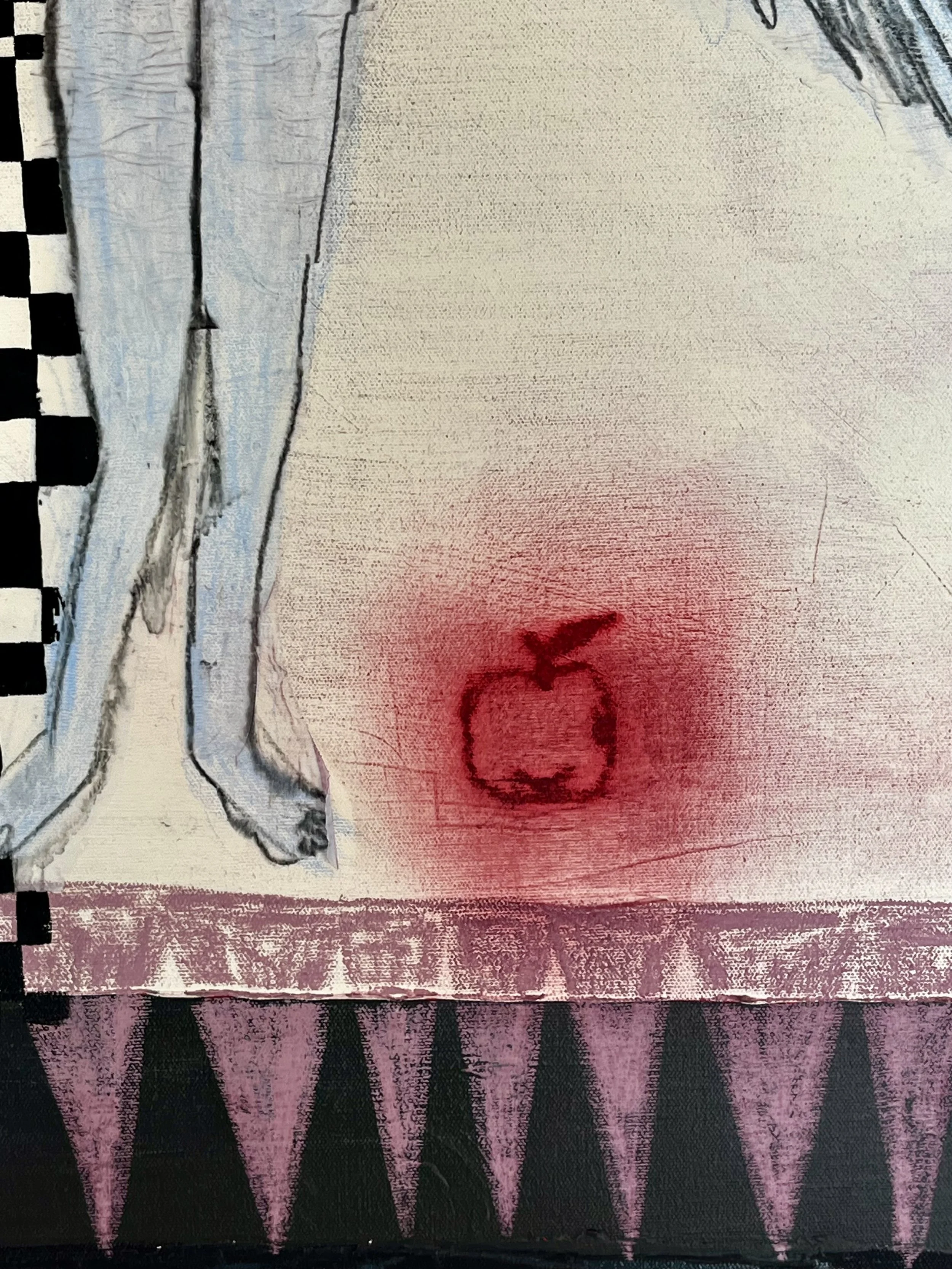 Image 9 of 9