
 Image 1 of 3
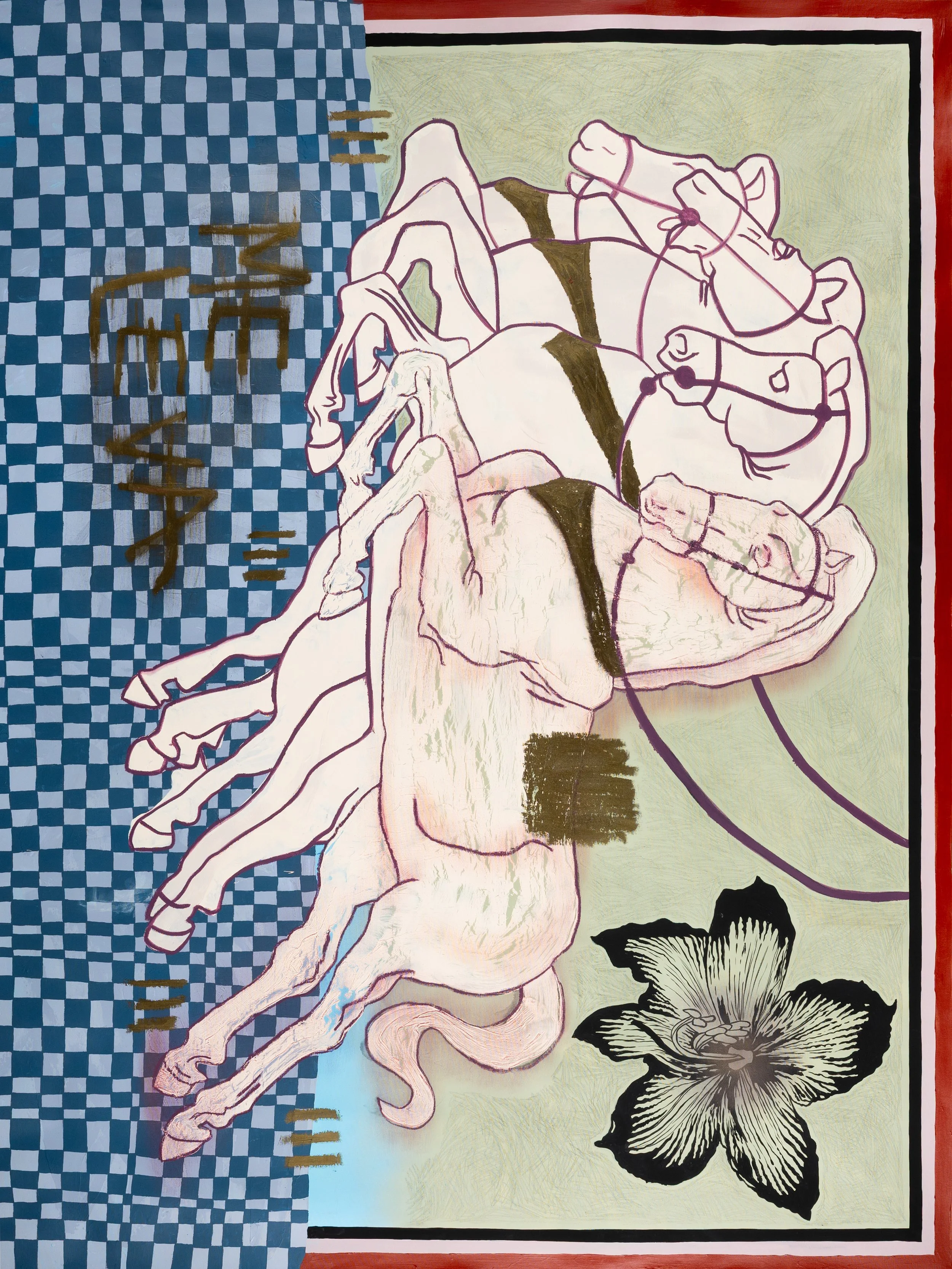 Image 2 of 3
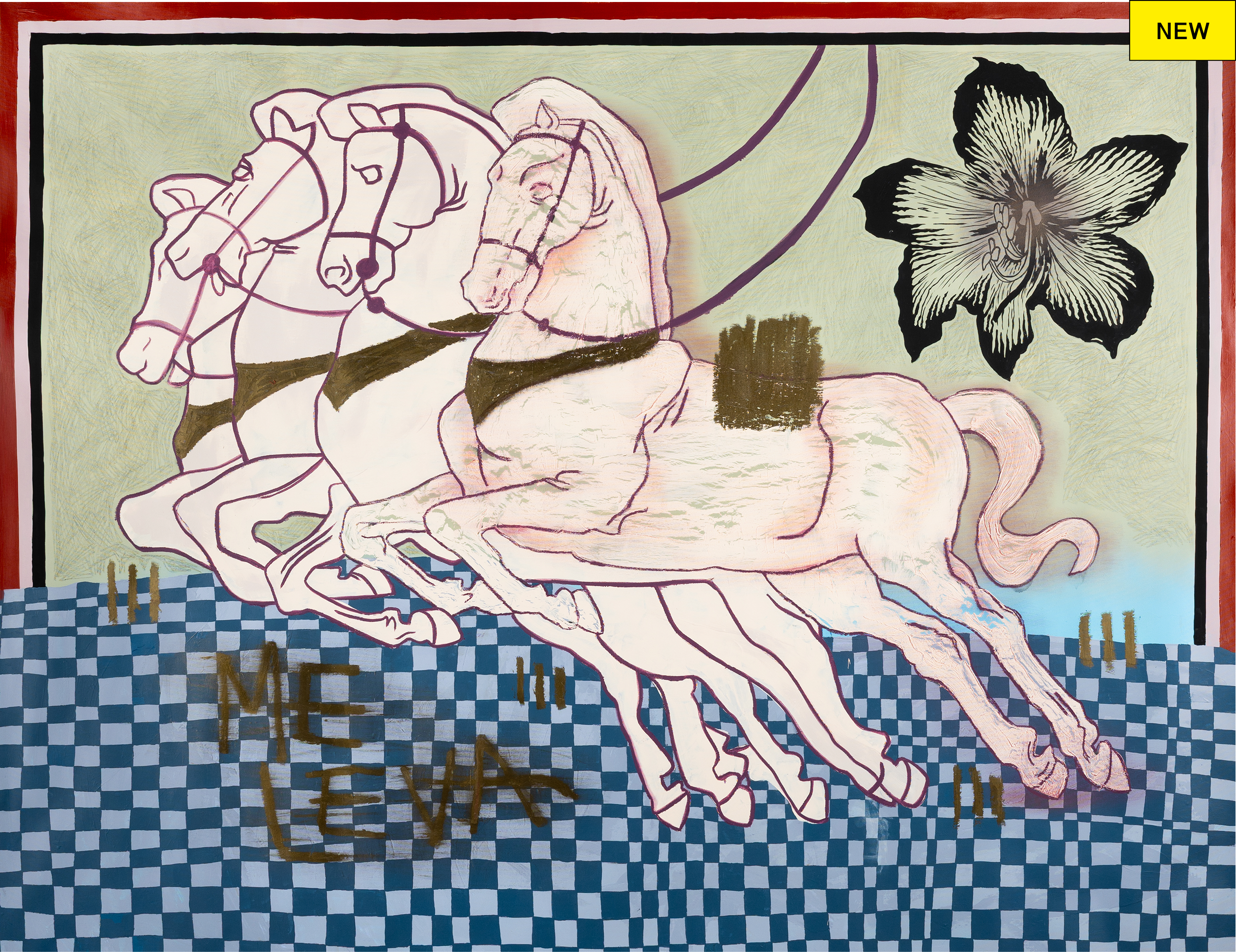 Image 3 of 3
The Great Companion
"On Motion, Surrender, and the Invisible Current
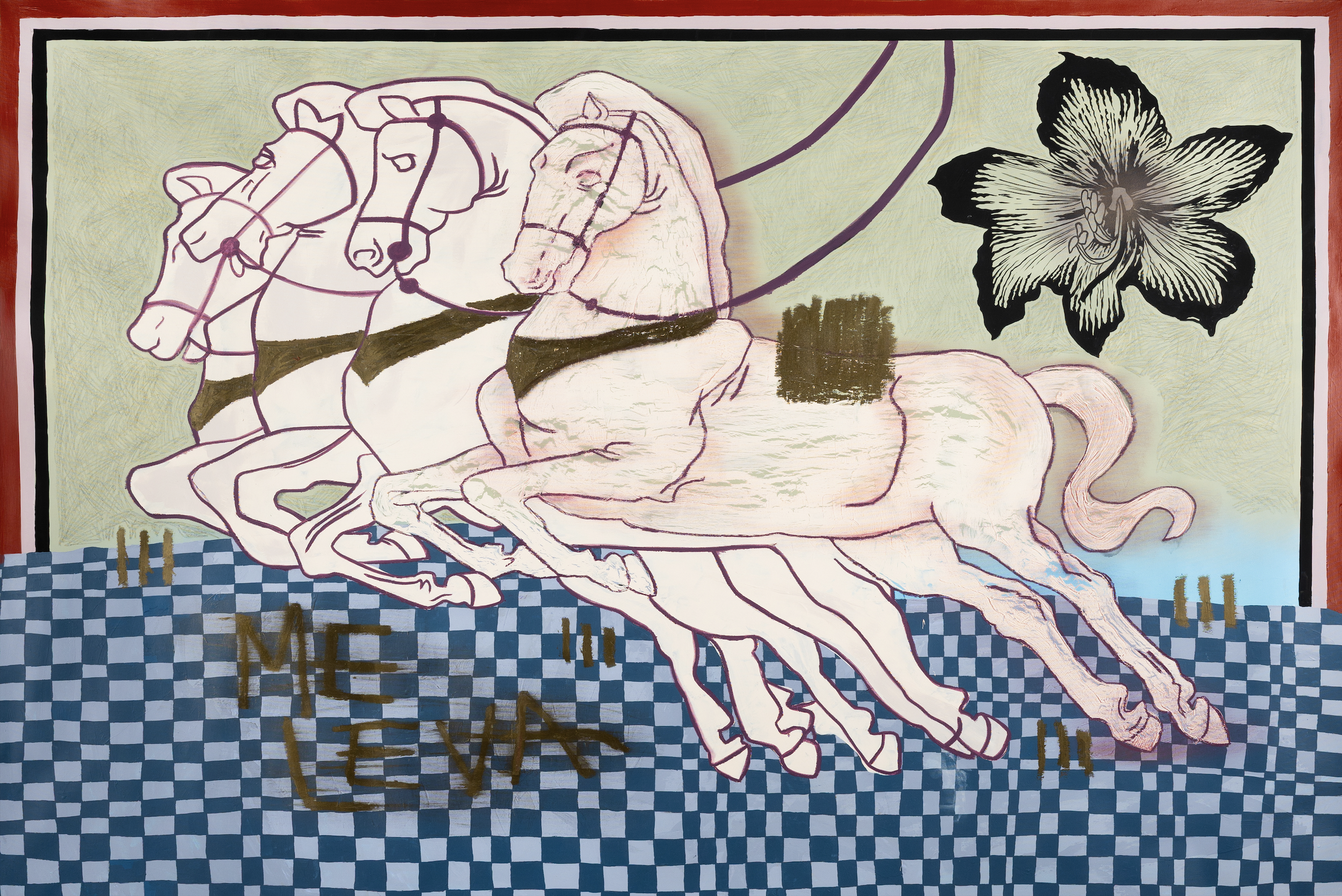
There are moments when something begins to stir inside us before the mind can name it, when the body senses a rhythm that thought has yet to catch. It is a tremor, a subtle awakening, as if the pulse of the world momentarily aligns with our own. In those moments, we are no longer the ones steering the course of our becoming. We are being led. Me leva, the painting says (carry me). It is both an invocation and a surrender, a plea for guidance and a confession of trust in whatever unseen current moves through life.
In The Great Companion, four horses surge forward in unison, their bodies suspended between grace and urgency. No driver holds their reins; no visible hand determines their direction. They move as though propelled by breath itself, a single force animating four distinct beings, four wills bound into one pulse. Within that motion lies a question older than any myth: what does it mean to move through life, to lead, or to be led?
The image of the chariot has always been a meditation on that question. In Tarot, The Chariot marks the threshold between mastery and faith. A reminder that direction is never achieved by control alone. The driver, armored but exposed, must learn to hold the reins lightly, to expertly balance will with intuition. But in this painting, the charioteer has vanished. What remains is pure propulsion, energy in its most essential and raw form.
I once heard that true power is the capacity to generate motion from nothing. To move, then, is not to impose one’s will upon the world but to allow the world to alchemize through you, to become its conduit. Movement is alignment. It arises when we cease resisting the current that moves us.
The title, The Great Companion, suggests something intimate, a presence that walks beside us not as a person but as the pulse of existence itself. Perhaps it is the same force that stirs the horses, the same vibration that hums beneath every act of creation, every breath, every gesture that dares to cross from stillness into form. It is both external and internal, both guide and mirror, the quiet intelligence that shapes us even when we believe we are the ones choosing.
The distinction between solitude and loneliness lives here. Loneliness is the forgetting that life itself is beside you; solitude is the remembering. When one enters true solitude, the world becomes your companion again, not in its human form, but in its elemental one: air, movement, the hum of the unseen. In that quiet recognition, I can sense the Great Companion as the subtle witness of life, a presence that neither commands nor abandons, but accompanies.
The horses become emissaries of that companionship. They do not look at one another, yet they move together. Four bodies, four directions, four limbs of the same will. Their unity is trust. They respond to the rhythm that threads through them like breath through lungs. To move forward, for them, is not an act of control but an act of faith.
If energy is the art of translating the invisible into motion, then it is the closest we come to touching the divine. The horses are not simply in motion; they are motion. There is no separation between what propels them and what they are. This is the nature of energy: it does not belong to us, it passes through us, transforming resistance into rhythm.
And yet, to let oneself be moved in this way requires immense courage. We are taught that control equals safety, that to lead is to master direction. But the deeper truth that The Great Companion reveals is that both leading and following belong to the same continuum. To lead is to surrender first; to follow is to trust what another has already surrendered to. Will and surrender are not opposites but reflections, each meaningless without the other.
Perhaps, then, the Great Companion is not only life itself, but the energy that arises in the space between will and surrender. The spark that ignites when we stop insisting on direction and begin listening to movement. It is not the driver of the chariot but the breath between the horses, the hum that binds them.
In the corner of the painting, a single black flower stands still. It does not move. It watches. This flower is the counterpoint to the horses. The still witness that observes motion without joining it. If the horses are breath, the flower is the pause between inhalation and exhalation, the momentary stillness that makes rhythm possible. Every act of motion requires its opposite. Without the pause, movement loses meaning; without stillness, energy burns itself out.
In mythic language, the flower might represent the eternal observer. That unchanging essence within us that does not move even as everything else does. In that sense, the Great Companion is both the current that carries and the silence that witnesses: the dual nature of all existence, motion and stillness folded into one.
To be led, I have learned, is not to lose direction. It is to trust that direction itself is alive. There is a grace in allowing life to pull you forward when your own will falters, there is a humility in recognizing that movement does not always originate in us but through us. This kind of surrender is not passive; it is participatory. It honors the unseen intelligence of the path, the invisible architecture of rhythm and return.
When the horses run, they do not ask where they are going. They trust the motion to carry them toward meaning. That, perhaps, is the true courage of movement: to move without knowing, to participate in faith rather than command. We speak often of control as strength, but perhaps strength is quieter…. the willingness to loosen the reins, to let the invisible companion lead for a while.
At its core, The Great Companion is a painting about relationship, between energy and stillness, between the one who moves and the one who watches, between life and the one who lives it. The horses may not be galloping across the world at all; they may be moving through time, through memory, through the inner terrain of becoming. Each step is a translation of stillness into sound, a gesture of faith made visible.
And so Me Leva — carry me — becomes more than a plea. It becomes a covenant. To move is to say yes to the current that sustains life, to recognize that every act of surrender is an act of union. The painting suspends us in that delicate balance between effort and grace, reminding us that motion itself is a form of prayer.
Because to move, after all, is to affirm the simplest and most sacred truth of existence:
to be carried is still to move,
and to move is to be alive. - Antonia xx
Add a wonderful accent to your living space with this poster that is sure to brighten any environment.
Printed on 200g natural art paper with a matte, uncoated finish and lightly textured surface, that ensures a rich and vibrant display of colors.
Sustainability is important to us, that is why our prints are made to order and not printed until the order is received. All orders are printed and shipped within 3 business days of receiving the order.
Fits standard sized frames. The frame is not included.
No additional taxes or import duties will be charged on orders
shipped to the United States, Canada, European Union, EEA,
United Kingdom, Australia, or New Zealand.If your order has been damaged or lost within 1 month of shipment you are eligible for a complimentary reprint.
All sales are final and cannot be cancelled.
"On Motion, Surrender, and the Invisible Current
There are moments when something begins to stir inside us before the mind can name it, when the body senses a rhythm that thought has yet to catch. It is a tremor, a subtle awakening, as if the pulse of the world momentarily aligns with our own. In those moments, we are no longer the ones steering the course of our becoming. We are being led. Me leva, the painting says (carry me). It is both an invocation and a surrender, a plea for guidance and a confession of trust in whatever unseen current moves through life.
In The Great Companion, four horses surge forward in unison, their bodies suspended between grace and urgency. No driver holds their reins; no visible hand determines their direction. They move as though propelled by breath itself, a single force animating four distinct beings, four wills bound into one pulse. Within that motion lies a question older than any myth: what does it mean to move through life, to lead, or to be led?
The image of the chariot has always been a meditation on that question. In Tarot, The Chariot marks the threshold between mastery and faith. A reminder that direction is never achieved by control alone. The driver, armored but exposed, must learn to hold the reins lightly, to expertly balance will with intuition. But in this painting, the charioteer has vanished. What remains is pure propulsion, energy in its most essential and raw form.
I once heard that true power is the capacity to generate motion from nothing. To move, then, is not to impose one’s will upon the world but to allow the world to alchemize through you, to become its conduit. Movement is alignment. It arises when we cease resisting the current that moves us.
The title, The Great Companion, suggests something intimate, a presence that walks beside us not as a person but as the pulse of existence itself. Perhaps it is the same force that stirs the horses, the same vibration that hums beneath every act of creation, every breath, every gesture that dares to cross from stillness into form. It is both external and internal, both guide and mirror, the quiet intelligence that shapes us even when we believe we are the ones choosing.
The distinction between solitude and loneliness lives here. Loneliness is the forgetting that life itself is beside you; solitude is the remembering. When one enters true solitude, the world becomes your companion again, not in its human form, but in its elemental one: air, movement, the hum of the unseen. In that quiet recognition, I can sense the Great Companion as the subtle witness of life, a presence that neither commands nor abandons, but accompanies.
The horses become emissaries of that companionship. They do not look at one another, yet they move together. Four bodies, four directions, four limbs of the same will. Their unity is trust. They respond to the rhythm that threads through them like breath through lungs. To move forward, for them, is not an act of control but an act of faith.
If energy is the art of translating the invisible into motion, then it is the closest we come to touching the divine. The horses are not simply in motion; they are motion. There is no separation between what propels them and what they are. This is the nature of energy: it does not belong to us, it passes through us, transforming resistance into rhythm.
And yet, to let oneself be moved in this way requires immense courage. We are taught that control equals safety, that to lead is to master direction. But the deeper truth that The Great Companion reveals is that both leading and following belong to the same continuum. To lead is to surrender first; to follow is to trust what another has already surrendered to. Will and surrender are not opposites but reflections, each meaningless without the other.
Perhaps, then, the Great Companion is not only life itself, but the energy that arises in the space between will and surrender. The spark that ignites when we stop insisting on direction and begin listening to movement. It is not the driver of the chariot but the breath between the horses, the hum that binds them.
In the corner of the painting, a single black flower stands still. It does not move. It watches. This flower is the counterpoint to the horses. The still witness that observes motion without joining it. If the horses are breath, the flower is the pause between inhalation and exhalation, the momentary stillness that makes rhythm possible. Every act of motion requires its opposite. Without the pause, movement loses meaning; without stillness, energy burns itself out.
In mythic language, the flower might represent the eternal observer. That unchanging essence within us that does not move even as everything else does. In that sense, the Great Companion is both the current that carries and the silence that witnesses: the dual nature of all existence, motion and stillness folded into one.
To be led, I have learned, is not to lose direction. It is to trust that direction itself is alive. There is a grace in allowing life to pull you forward when your own will falters, there is a humility in recognizing that movement does not always originate in us but through us. This kind of surrender is not passive; it is participatory. It honors the unseen intelligence of the path, the invisible architecture of rhythm and return.
When the horses run, they do not ask where they are going. They trust the motion to carry them toward meaning. That, perhaps, is the true courage of movement: to move without knowing, to participate in faith rather than command. We speak often of control as strength, but perhaps strength is quieter…. the willingness to loosen the reins, to let the invisible companion lead for a while.
At its core, The Great Companion is a painting about relationship, between energy and stillness, between the one who moves and the one who watches, between life and the one who lives it. The horses may not be galloping across the world at all; they may be moving through time, through memory, through the inner terrain of becoming. Each step is a translation of stillness into sound, a gesture of faith made visible.
And so Me Leva — carry me — becomes more than a plea. It becomes a covenant. To move is to say yes to the current that sustains life, to recognize that every act of surrender is an act of union. The painting suspends us in that delicate balance between effort and grace, reminding us that motion itself is a form of prayer.
Because to move, after all, is to affirm the simplest and most sacred truth of existence:
to be carried is still to move,
and to move is to be alive. - Antonia xx
Add a wonderful accent to your living space with this poster that is sure to brighten any environment.
Printed on 200g natural art paper with a matte, uncoated finish and lightly textured surface, that ensures a rich and vibrant display of colors.
Sustainability is important to us, that is why our prints are made to order and not printed until the order is received. All orders are printed and shipped within 3 business days of receiving the order.
Fits standard sized frames. The frame is not included.
No additional taxes or import duties will be charged on orders
shipped to the United States, Canada, European Union, EEA,
United Kingdom, Australia, or New Zealand.If your order has been damaged or lost within 1 month of shipment you are eligible for a complimentary reprint.
All sales are final and cannot be cancelled.